
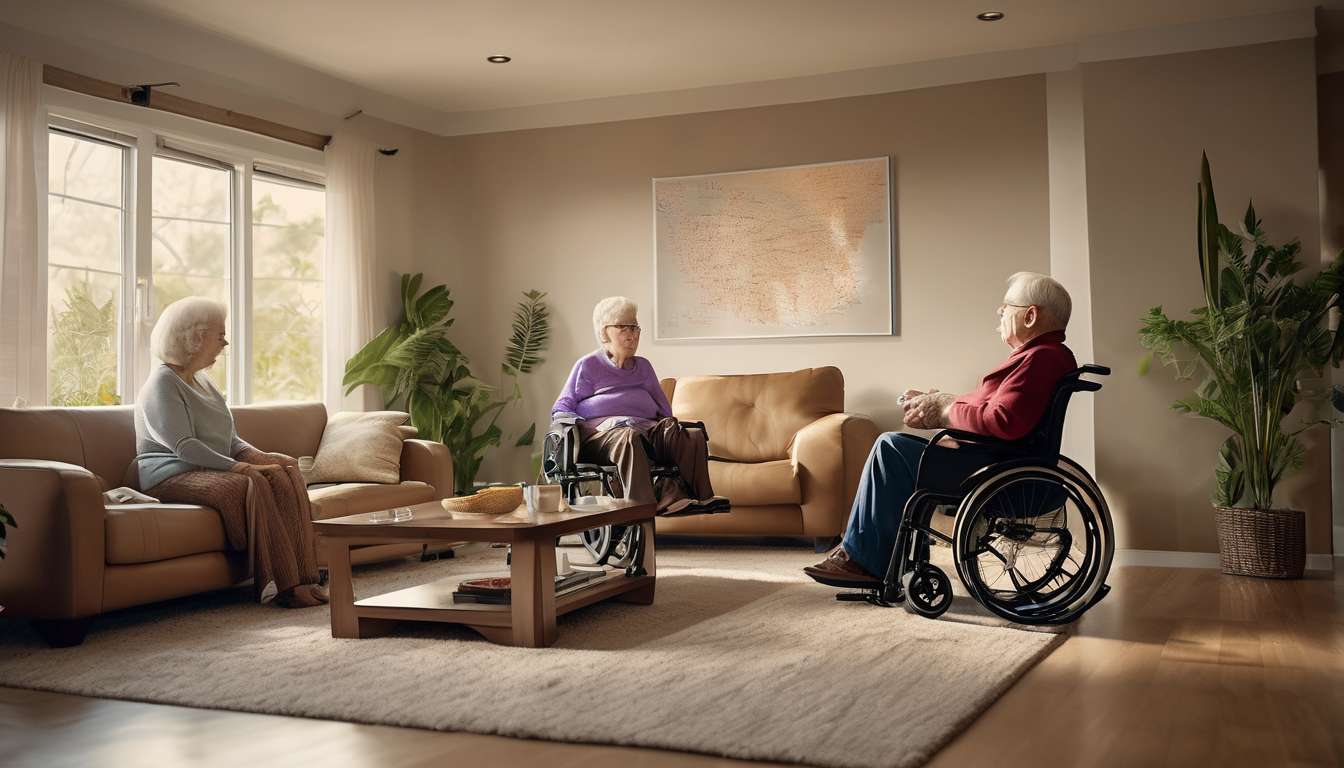
Might increasing access to audio descriptions and customizable captions change who gets to participate in film festivals, streaming communities, and local media workshops?
We ask this because accessibility tools are no longer niche aids — they are gateways that reshape creative spaces and audiences alike. As we explore how screen readers, tactile storyboards, and variable-speed audio influence adult visual media, we consider the people sidelined by traditional formats and the new contributors who emerge when barriers fall.
We observe several shifts in practice and participation:
-
Filmmakers experimenting with multisensory storytelling.
- More creators are integrating audio descriptions, haptic elements, and sonification into production, which changes narrative techniques and design priorities.
-
Venues adopting inclusive programming.
- Festivals and community screenings increasingly schedule audio-described and captioned shows, host tactile exhibits, and provide sensory-friendly times, making events accessible to a wider audience.
-
Platforms offering layered interfaces that honor diverse needs.
- Streaming services now let users toggle multiple caption styles, audio-description tracks, and playback speeds, enabling different modes of engagement.
We examine evidence from empirical studies and lived experiences to track impacts:
-
Who benefits?
- People who are blind or have low vision through audio descriptions.
- Deaf and hard-of-hearing audiences via customizable captions.
- Neurodivergent viewers who benefit from variable-speed audio, simplified text, or sensory-friendly presentations.
- Older adults and non-native speakers who use captions, slowed audio, or clearer descriptive tracks.
-
How participation changes:
- Authorship expands. Creators with disabilities can more readily contribute and lead projects when accessible tools are standard.
- Critique diversifies. New perspectives enter critical conversations, shifting what is valued in storytelling and form.
- Distribution adapts. Accessible-ready works can reach broader markets and community platforms that prioritize inclusion.
By centering accessibility as expansion rather than accommodation, we argue:
- These tools broaden authorship. More people can make work and have their visions realized.
- They diversify viewership. Audiences become more representative of varied abilities, ages, languages, and sensory needs.
- They enrich cultural conversation. Multisensory and inclusive practices introduce new aesthetics, critiques, and modes of participation that strengthen the media ecosystem.
Conclusion:
Increasing access to audio descriptions and customizable captions is likely to change who participates in film festivals, streaming communities, and local media workshops by lowering barriers, enabling new creators and audiences to engage, and transforming artistic practice, critique, and distribution toward a more vibrant and representative media landscape.
Why accessibility matters
We need accessible visual media because it lets more adults fully perceive, understand, and engage with content regardless of sight, hearing, or cognitive differences.
We believe access isn’t optional — it’s how we build spaces where everyone feels welcome.
By offering audio description alongside visual storytelling, we let blind and low-vision adults follow scene detail, emotion, and action without missing context.
Customizable captions give people control:
- Size
- Color
- Timing
- Language options
These settings mean captions meet individual needs rather than forcing a one-size-fits-all solution.
These features don’t just help a few; they strengthen communities, boost participation, and expand audiences for venues and creators.
When we design with inclusion in mind, events like inclusive festivals become celebrations where people of varied abilities can participate equally, from ticketing to performances.
Accessibility choices are practical and social:
- They improve comprehension.
- They reduce frustration.
- They signal respect.
We want to create media environments where adults feel they belong, can engage confidently, and are invited to contribute their perspectives.
Audio description in practice
Goal: Create concise spoken descriptions that let blind and low-vision adults follow visual media without interrupting dialogue or pacing.
Script only essential visuals.
- Focus on character actions, scene changes, and important expressions so descriptions stay brief and purposeful.
Time narration to fit natural pauses.
- Use a neutral tone and clear diction that respect the work’s rhythm.
Test with diverse listeners.
- Invite feedback from blind and low-vision adults and other stakeholders so everyone feels welcomed into the creative process.
Deliver audio description via flexible platforms.
- Embedded streams.
- Separate audio channels.
- Downloadable tracks synchronized with players.
Coordinate with event organizers.
- Ensure venues and inclusive festivals know how to route audio to headsets or mobile apps.
Integrate with other supports.
- Offer descriptions alongside customizable captions for those who want combined supports, ensuring choices belong to each audience member.
Document and train.
- Document workflows and label files clearly.
- Train staff on syncing and troubleshooting.
Principles: Center collaboration and transparency.
- Make audio description reliable, respectful, and readily accessible.
Customizable caption benefits
We can tailor caption appearance and content so viewers control text size, color, placement, and whether to include speaker labels or sound cues.
We build customizable captions that let each person set what feels comfortable and clear, affirming diverse needs without singling anyone out.
When viewers choose concise wording, larger fonts, high-contrast palettes, or subtle positioning, they stay engaged and included.
We pair customizable captions with audio description options to support both low-vision and DeafBlind attendees, creating layered accessibility that respects varied sensory preferences.
In community screenings and inclusive festivals, offering these settings signals that everyone belongs and that organizers value participation over one-size-fits-all solutions.
Flexible captioning delivers multiple benefits:
- Improves comprehension.
- Reduces viewer fatigue.
- Encourages social attendance because people know their access needs will be met.
By standardizing customizable captions alongside audio description, we make adult visual media more welcoming, practical, and equitable for our whole community.
Multisensory storytelling trends
We’re expanding storytelling beyond sight and sound by integrating touch, scent, and haptic feedback to create richer, more accessible experiences.
We’re designing multisensory narratives so everyone feels included, blending audio description with tactile maps, scent cues, and timed haptics to reinforce mood and plot.
We pair audio description with adaptable timing so descriptions align with haptic pulses, and we offer customizable captions that reflect sensory layers—identifying nonverbal textures, smells, and physical sensations.
We’re collaborating with creators, technologists, and audience members to test sensory palettes that respect neurodiversity and personal comfort.
- We let viewers opt into intensity levels.
- We prototype different combinations of touch, scent, and sound to find comfortable, meaningful mixes.
- We prioritize consent, safety, and clear labeling for sensory content.
We’re bringing these prototypes into community screenings and inclusive festival settings to gather feedback and refine standards that center belonging.
By making multisensory tracks modular and user-controlled, we ensure accessibility features aren’t one-size-fits-all but empower individuals to tailor experiences.
This approach broadens participation, deepens empathy across senses, and builds a culture where everyone can enjoy and contribute to visual media.
Inclusive festival programming
Accessibility-first festival programming
We will foreground accessibility by scheduling sensory-friendly showings, offering multiple multisensory tracks, and ensuring venues meet mobility and communication needs.
We will design schedules so everyone can join without compromise:
- Clear timing and program information.
- Quiet transition spaces between events.
- Staffed welcome points to assist attendees.
We will prioritize adaptable access features:
- Audio description alongside visual cues.
- Customizable captions across screenings so attendees can tailor access to their preferences.
We will invite creators who center diverse bodies and minds and compensate consultants with lived experience for programming decisions.
We will prepare physical navigation and calming spaces:
- Map routes and provide tactile signage.
- Set aside quiet rooms to reduce overwhelm.
We will train staff and volunteers in respectful communication, sighted guide techniques, and accessible ticketing practices.
We will promote inclusivity transparently through honest materials that highlight available supports.
We will gather participant feedback and iterate each year, embedding accessibility from conception to post-event evaluation so people feel seen, heard, and welcome — not accommodated as an afterthought but embraced as essential.
Platform design for access
We will build platform interfaces that put accessibility controls and content discovery front and center so users can find and customize experiences quickly.
We design clear menus that surface audio description tracks, customizable captions, and language options without extra clicks, so everyone feels seen and able.
We prioritize consistent layout, readable typography, and high-contrast themes that users can toggle.
- We let people save profiles so preferences follow them across sessions.
We integrate filters that highlight offerings from inclusive festivals and community-curated lists, making discovery feel welcoming rather than overwhelming.
We test with diverse users and iterate quickly, addressing feedback about navigation, playback controls, and metadata that drives accurate captions and description timing.
We build tools that let creators attach multiple audio description versions and caption formats, reducing barriers to contribution.
We provide transparent settings for privacy and sharing so users trust their choices.
By centering accessibility in platform design, we create spaces where participation, belonging, and creative expression grow together.
Expanding authorship and critique
Goal: Expand authorship and critique by giving more creators and reviewers the tools and platforms to make, share, and evaluate accessible visual work.
Lower technical and social barriers.
- Build workflows that reduce friction and increase participation.
- Examples:
- Simple audio description editors.
- Easy-to-toggle, customizable captions.
- Submission portals that accept multiple access formats.
Support and compensate lived-experience reviewers.
- Train peer reviewers with lived experience.
- Compensate reviewers fairly for their time and expertise.
- Create mentorship circles pairing emerging makers with seasoned accessibility advocates.
Host inclusive, constructive feedback spaces.
- Organize festivals and events where feedback is structured, safe, and actionable.
- Emphasize community norms that protect participants and encourage growth.
Publish clear, non-prescriptive guidance.
- Produce guidelines that demystify accessibility choices without policing aesthetics.
- Focus on practical recommendations and trade-offs creators can make.
Prioritize interoperable, rights-respecting infrastructure.
- Promote interoperable file formats and collaborative annotation tools.
- Adopt practices that respect creators’ rights and control over their work.
Center community-led standards and collective critique.
- Promote standards developed by the communities they serve.
- Foster collective critique practices so evaluation reflects diverse needs and values.
Outcome: By investing in practical tools, accessible workflows, and welcoming spaces, we make authorship and critique more representative, skilled, and sustained—so everyone can contribute and be heard.
Measuring impact and equity
To understand whether our efforts actually broaden participation and reduce barriers, we need clear metrics that track who’s reached, who benefits, and who’s still left out.
We measure reach by collecting disaggregated data on audience demographics and access-tool usage — who opts for audio description or customizable captions, and where those options increase attendance or engagement.
We assess benefit through qualitative feedback and outcome indicators:
- Did artists with disabilities gain exhibition slots?
- Did attendees experience better comprehension?
- Did community members feel welcomed at inclusive festivals?
We prioritize transparency and consent in data collection so contributors trust that information builds inclusion, not exclusion.
We set equity targets tied to funding and programming, and evaluate processes as well as outcomes:
- Are procurement practices equitable?
- Are curation practices equitable?
We iterate:
- Create benchmarks.
- Test interventions.
- Report results.
- Adjust.
By centering lived experience alongside quantitative measures, we make sure our metrics reflect belonging and lead to concrete change.
How do privacy concerns get handled when accessibility features—like personalized captions or adaptive audio—collect and use viewer preferences or biometric data?
Privacy for accessibility features is handled through three core principles: consent, transparency, and user control.
Consent.
- We require clear opt‑in consent before any accessibility feature collects preferences or biometric data.
- Consent requests describe what data will be collected and the specific purpose.
- Users can withdraw consent at any time.
Transparency.
- We explain exactly what data is collected, how it is used, and who can access it.
- Privacy notices are written in plain language and available at the point of collection and in account settings.
- We provide a simple audit trail so users can see when and why their data was accessed.
User control.
- Users have easy ways to view, edit, export, and delete their collected data.
- Default settings favor minimal collection and privacy-preserving modes; users can opt into more personalized options.
Data minimization and anonymization.
- We collect only the data strictly necessary for the accessibility feature to function.
- Wherever possible, data is anonymized or pseudonymized to prevent identification.
Security and sharing.
- Collected data is stored securely using industry-standard encryption and access controls.
- Data is shared only when necessary and under strict contractual and technical safeguards.
Governance and accountability.
- We commit to regular privacy audits and security reviews.
- Community input and stakeholder feedback are sought for policy updates and feature design.
What are the costs and funding models for small or independent creators to implement professional audio description and high-quality captions?
Question: What does it cost and how can small creators fund pro audio description and top captions?
Cost overview
Automated captions are the most affordable option but vary in accuracy; they are often free or low-cost.
Human captions and professional audio description typically cost hundreds to thousands of dollars per hour of finished video, depending on transcription/detail level, turnaround time, language, and provider expertise.
Key point: Professional accessibility services can be expensive for small creators without external support.
Funding strategies
Pooling resources is essential. Consider combining multiple sources:
- Grants.
- Crowdfunding (one-off campaigns or ongoing Patreon-style support).
- Platform accessibility funds (some platforms offer creator funds or accessibility subsidies).
- Creator collectives that share costs or hire providers jointly.
- Revenue shares where platforms or partners subsidize accessibility in exchange for a share of earnings.
- Barter (skill swaps, in-kind exchanges with accessibility professionals).
Sustainability and values
Prioritize sustainable, community-centered funding to keep accessibility consistent and inclusive rather than relying on ad-hoc solutions.
- Build recurring funding streams (subscriptions, retained grants, membership tiers).
- Share resources and negotiate bulk rates with providers through collectives.
- Involve the community in funding decisions and transparency about how funds are used.
Practical next steps
- Estimate costs by getting quotes for captions and audio description per finished hour.
- Pilot a funding mix (e.g., small grant + crowdfunding + barter) to test viability.
- Document and share outcomes to attract repeat funding and encourage platform support.
Bottom line: Professional captions and audio description can be costly, but combining grants, crowdfunding, platform funds, collectives, revenue-sharing, and barter—while focusing on sustainable, community-led approaches—makes consistent accessibility achievable for small creators.
How do accessibility tools accommodate viewers with multiple, intersecting needs (for example, someone who is both DeafBlind and neurodivergent)?
We recognize overlapping user needs, so we design layered, flexible options that can be combined.
Key output options include:
- Tactile or braille output plus descriptive audio.
- Synchronized captions with simplified language.
- Customizable pacing and sensory controls for sound and visuals.
Testing and configuration:
- We test with diverse users to validate real-world needs and usability.
- We provide clear settings and presets so users can quickly apply common configurations.
Interoperability and customization:
- We ensure assistive devices and software interoperate, allowing different tools to work together.
- Users can tailor the experience to their unique needs by combining options as required.
Conclusion
You’ve seen how accessibility tools don’t just accommodate—they enrich.
Audio description opens imagery by translating visual details into sound, making scenes, spatial relationships, and visual nuance available to people who are blind or have low vision.
Customizable captions boost comprehension by letting viewers adjust size, color, and placement so captions work for different languages, hearing levels, and learning needs.
Multisensory storytelling invites new engagement through combinations of sound, tactile elements, and interactive design that reach audiences beyond traditional sight-and-hearing modalities.
Festivals and platforms that prioritize access broaden audiences and creators.
When you design with inclusion, you cultivate richer critique, diverse authorship, and fairer measures of impact.
Keep pushing for accessible practices so everyone can participate, be represented, and shape the future of visual media.